A garage door that refuses to close properly tends to go from mild annoyance to pressing problem very quickly. One day it hesitates halfway down. The next day it touches the ground, then reverses for no obvious reason. Sometimes it sits crooked in the opening, leaves a gap at one corner, or makes a sound that tells you something is under strain. Whatever form it takes, a door that will not close as it should is not just inconvenient. It affects security, weather protection, and the daily rhythm of leaving and returning home.
In my experience, people often focus on the immediate symptom and miss the larger story behind it. They look at the remote, press the wall button a few more times, maybe pull the cord, and hope the problem will sort itself out. Occasionally the issue is simple. Just as often, the door has been asking for attention for months through subtle signs: slower travel, a change in noise, uneven movement, or a motor working harder than it used to. Servicing matters because it deals with those underlying causes, not just the moment when the door finally stops behaving.
When a homeowner says the garage door not closing properly is the only issue, I usually think in terms of systems rather than a single fault. The door, the motor, the springs, the tracks, and the hardware all work together. If one part is worn, misaligned, or under the wrong load, the closing cycle is often where the problem shows up first.
Why closing problems happen in the first place
A garage door closes under guidance, balance, and controlled force. If A1 garage doors gold coast qld those are off, even slightly, the door may struggle to reach the floor smoothly. That can happen because of mechanical wear, shifting alignment, ageing components, or motor issues. In some homes, the problem develops gradually enough that people adapt to it without realizing it. They learn to hold the button down longer, nudge the door manually, or accept that one garage door resource side sits lower than the other. Then one day the workaround stops working.
Garage door alignment is one of the most common themes behind poor closing performance. A door should travel evenly in its path. If it is not tracking as it should, the strain shows up during movement. You may notice a jerky descent, rubbing, scraping, or a gap that appears along one edge near the floor. Alignment is rarely something to guess at casually because it interacts with the rest of the door system. A small misalignment can place extra demand on the opener or contribute to uneven wear elsewhere.
Springs also have a major role in how a door moves. They help counterbalance the weight of the door, which means the motor is not doing all the work alone. When springs wear out or break, the change in balance can make a closing problem seem like a motor problem when it is really a door balance problem. That distinction matters. Springs are under high tension and are widely recognized as dangerous to adjust or repair without proper training and tools. That is not a task to learn by trial and error.
The motor and opener system can be part of the story as well. In many service areas, garage door opener repair is a routine call because motors, remotes, and automation components do wear over time. Some businesses also provide motor replacement and automation upgrades for existing doors, which tells you how often these systems are expected to be repaired or updated rather than left untouched for the life of the door.
What servicing actually does
People sometimes hear “service” and picture a quick spray of lubricant and a bill. Good servicing is broader than that. It is an inspection of how the door moves, how evenly it closes, whether components show signs of wear, and whether the system is still operating as a balanced whole. It is the difference between reacting to a breakdown and catching the conditions that lead to one.
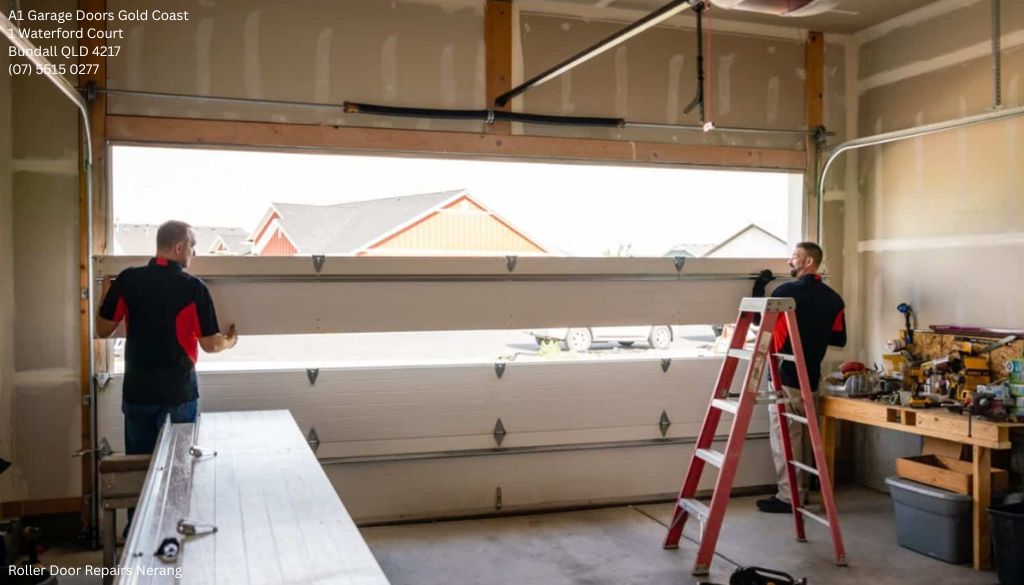
A proper service appointment for a closing issue can reveal whether the problem sits in the motor, the door’s alignment, the springs, or another worn component. That is valuable because replacing the wrong part wastes time and money. If the real issue is balance, a motor adjustment alone will not fix garage door behaviour for long. If the door is out of alignment, replacing a remote will obviously do nothing.
Servicing can also prevent the common pattern where one neglected issue leads to another. A motor working against an unbalanced or poorly aligned door may wear faster. A door that does not travel smoothly can place stress on hardware. The problem you notice today may be the end result of smaller issues that started months earlier.
This is why regular maintenance remains such a sensible idea. At least one garage door business in the Gold Coast area recommends professional servicing every 12 months to help prevent breakdowns and extend the life of the door and motor. That interval is practical because many forms of wear develop slowly enough to be caught during annual checks, but not so slowly that they can be ignored indefinitely.
The local environment can make things worse
Not every garage door ages at the same rate. Location plays a part. In coastal areas such as the Gold Coast, businesses often point out that salt air, humidity, and heat can affect garage door hardware and increase maintenance needs. That is not a dramatic claim. It is a practical one.
Salt air can be hard on metal components. Humidity can contribute to ongoing wear. Heat can amplify the stresses placed on moving parts and automation systems over time. A door in a milder inland environment may not face the same maintenance demands as a door near the coast. That helps explain why some homeowners are surprised by how quickly a once-reliable system starts sticking, slowing, or closing unevenly.
I have seen this in many forms with outdoor mechanical systems in general. People expect obvious damage before they take action, but the more common pattern is slow degradation. Fasteners, springs, motors, and door hardware do not always fail dramatically at first. They often become less precise, less smooth, and less forgiving. Servicing is what catches that middle stage.
When the symptom points to alignment
If the bottom edge of the door does not sit flat when it reaches the floor, or if one side appears lower than the other during travel, garage door alignment deserves attention. Alignment problems can show up in subtle ways before they become obvious. The door may shudder slightly on the way down. It may close but leave a small uneven gap. It may seem fine from inside the garage while looking noticeably crooked from the street.
What makes alignment issues frustrating is that they can masquerade as several other problems. A homeowner might think the opener is failing because the door slows or reverses. Another might assume the floor is uneven. Sometimes the issue is not dramatic enough to stop operation completely, which encourages people to postpone repair. That delay tends to increase wear.
Servicing helps because it focuses on movement, fit, and stress across the system. Rather than asking only whether the door goes up and down, it asks whether it does so evenly and without unnecessary strain. That is the difference between temporary coping and a proper fix garage door approach.
The role of springs, and why caution matters
Springs deserve special attention any time a garage door not closing properly is part of the complaint. They carry a lot of the load involved in lifting and lowering the door. When they weaken or fail, the door can behave unpredictably. It may feel unusually heavy, travel awkwardly, or place extra demand on the opener.
Professional repair businesses commonly list spring replacement as a standard service, which makes sense given how central springs are to door performance. Safety guidance is also clear that garage door springs are under high tension and are dangerous to adjust or repair without proper training and tools. That warning is not there to make the job sound complicated. It reflects real risk.
There is another important point that often gets overlooked. When one spring breaks, both springs may need replacement because they usually wear at a similar rate, and mismatched springs can create balance problems. That matters in practical terms. Replacing only the visibly failed spring may seem cheaper in the moment, but if the pair no longer shares the load evenly, the door may continue to operate poorly or place new stress on the system.
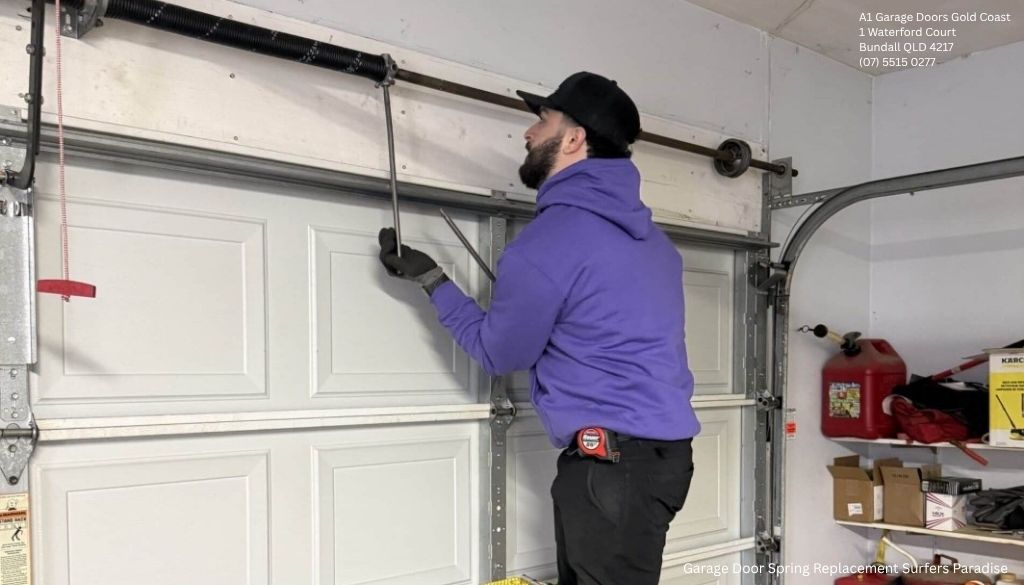
This is one of those cases where servicing and repair overlap. A technician is not only swapping a part. They are restoring proper balance so the whole door closes as intended.
Why opener problems are not always what they seem
Garage door opener repair is often part of the solution, but it should not be the default assumption every time the door acts up. Homeowners tend to focus on the opener because it is the visible point of control. The remote stops working consistently, the motor hums, or the wall switch seems temperamental. Those are real clues, but they do not always identify the root cause.
If a door is misaligned or poorly balanced, the opener may struggle because it is compensating for another fault. Repairing or replacing the opener without addressing the door itself can leave the same closing problem in place. On the other hand, there are times when the automation side genuinely is the issue, and a service visit can confirm that. Many companies now offer motor replacement or installation services, including automation upgrades for existing garage doors, precisely because motors and opener systems are normal wear items over the life of the installation.
This is where informed diagnosis pays off. A service call may reveal that a new motor is justified. It may also reveal that the opener is fine and the real problem lies in spring tension, alignment, or hardware wear. The best outcome is not the most dramatic one. It is the one that restores reliable operation without unnecessary replacement.
What homeowners can notice before calling for service
You do not need specialist tools to notice when a garage door is behaving differently than usual. Everyday observation can be useful, especially when the issue comes and goes. Small changes often matter. A door that used to close in one smooth motion but now pauses, shakes, or sounds harsher is worth watching. A remote that needs repeated presses may point to an opener issue, but it may also be part of a larger service picture.
These are the kinds of signs that justify a closer look:
The door closes unevenly or appears crooked in the opening. It reaches the floor and then does not sit properly against it. The motor sounds strained or the door movement becomes jerky. The problem has become more frequent over days or weeks. You suspect a spring issue or notice a sudden change in door balance.That is not a repair guide. It is a decision guide. The purpose is to recognize that a recurring closing problem usually does not improve on its own.
The trade-off between waiting and servicing now
Many homeowners postpone service because the door still works some of the time. That hesitation is understandable. If the garage door eventually closes after a second attempt, it does not feel like an emergency. But there is a trade-off. Intermittent problems can be more expensive in the long run because they allow wear to spread.
A slightly unbalanced door may continue operating for a while, but the strain does not disappear. A door that is out of alignment may still close on dry days and stick on humid ones, giving the false impression that the problem is minor. A motor that compensates for mechanical drag can keep going until it cannot. By the time a homeowner decides to act, the repair may involve more than one part.
This is where annual servicing shows its value. If a professional checks the system every 12 months, there is a better chance of catching alignment drift, hardware wear, or spring fatigue before the closing problem becomes a breakdown. That does not guarantee nothing will fail between visits, but it improves the odds of dealing with smaller issues earlier.
Repairs, replacement, or an upgrade?
Not every service visit ends the same way. Sometimes the fix is a straightforward repair. Sometimes a component such as a spring or motor needs replacement. In other cases, especially with older systems, an automation upgrade may make more sense than repeated patchwork on ageing equipment.
Gold Coast service providers commonly advertise repairs, servicing, installations, and replacement of components such as motors, remotes, and springs. That range reflects how garage doors are maintained in the real world. They are not all-or-nothing systems. Parts wear at different rates, and the right solution depends on which part is causing the closing issue.
Judgment matters here. Replacing a remote because it has failed is different from replacing a motor that no longer performs reliably. Replacing a pair of worn springs is different from trying to squeeze more life out of one old spring after the other has broken. Good servicing helps sort those decisions out with a clear view of the system as a whole.
The jobs best left to professionals
There is a natural temptation to fix garage door problems yourself, especially when the issue looks mechanical rather than electrical. For very basic observation and maintenance decisions, homeowners can be sensible and careful. But some work carries risks that outweigh the savings.
Professional help is especially important when:
A spring may be broken or failing. The door appears unbalanced or suddenly feels much heavier. The closing problem is getting worse, not better. The opener may be under strain from another fault. The door is visibly out of alignment.
The common thread is not just complexity. It is consequence. A misjudged repair on a critical component can create a larger problem or expose someone to avoidable danger.
What a well-serviced door feels like
When a garage door has been properly serviced, the improvement is often less dramatic than people expect, but more reassuring. The door moves smoothly. It closes evenly. The motor does not sound like it is fighting the door. The system feels settled. That sense of normal operation is easy to undervalue until it disappears.
I often think that reliable mechanical systems earn little appreciation precisely because they are quiet and routine. You press a button, the door opens, you press it again, it closes, and you move on with your day. Servicing preserves that kind of reliability. It keeps small issues from becoming daily workarounds and helps maintain the balance between the door, the springs, and the opener.
If your garage door not closing properly has become part of the household routine, that is usually the moment to stop adapting and start diagnosing. The fix might be modest. It might involve garage door opener repair, spring replacement, or correction of garage door alignment. What matters is that servicing looks beyond the symptom and restores the door to proper operation. For something you rely on every day, that is usually the smartest path forward.